We build the one percent of digital products.
MenuMatch
MenuMatch gives restaurants one place to create, customize, publish, and operate digital menus: from role-based administration and drag-and-drop editing to public QR access and customer ordering.
Restaurant menus are both structured operational data and a public brand surface. A useful system has to keep sections, items, prices, allergens, availability, imagery, and order quantities manageable without turning every update into a publishing project.
The brief was to build the complete loop: platform administrators create restaurants, restaurant administrators manage menus, customers browse and order through public pages, and order viewers monitor incoming orders.
We designed around a core constraint: every menu change should happen in one place and propagate immediately to every touchpoint:QR code, preview link, customer-facing page. That single source of truth model shaped every technical decision we made.
The permission model needed to support two distinct roles: a super-admin managing all restaurants, and individual restaurant admins managing their own. We kept the hierarchy flat:no elaborate role matrices, just scoped access that keeps each restaurant admin focused on their own data.
The interface treats each menu as both content and brand: operationally easy to maintain, visually specific to the restaurant.
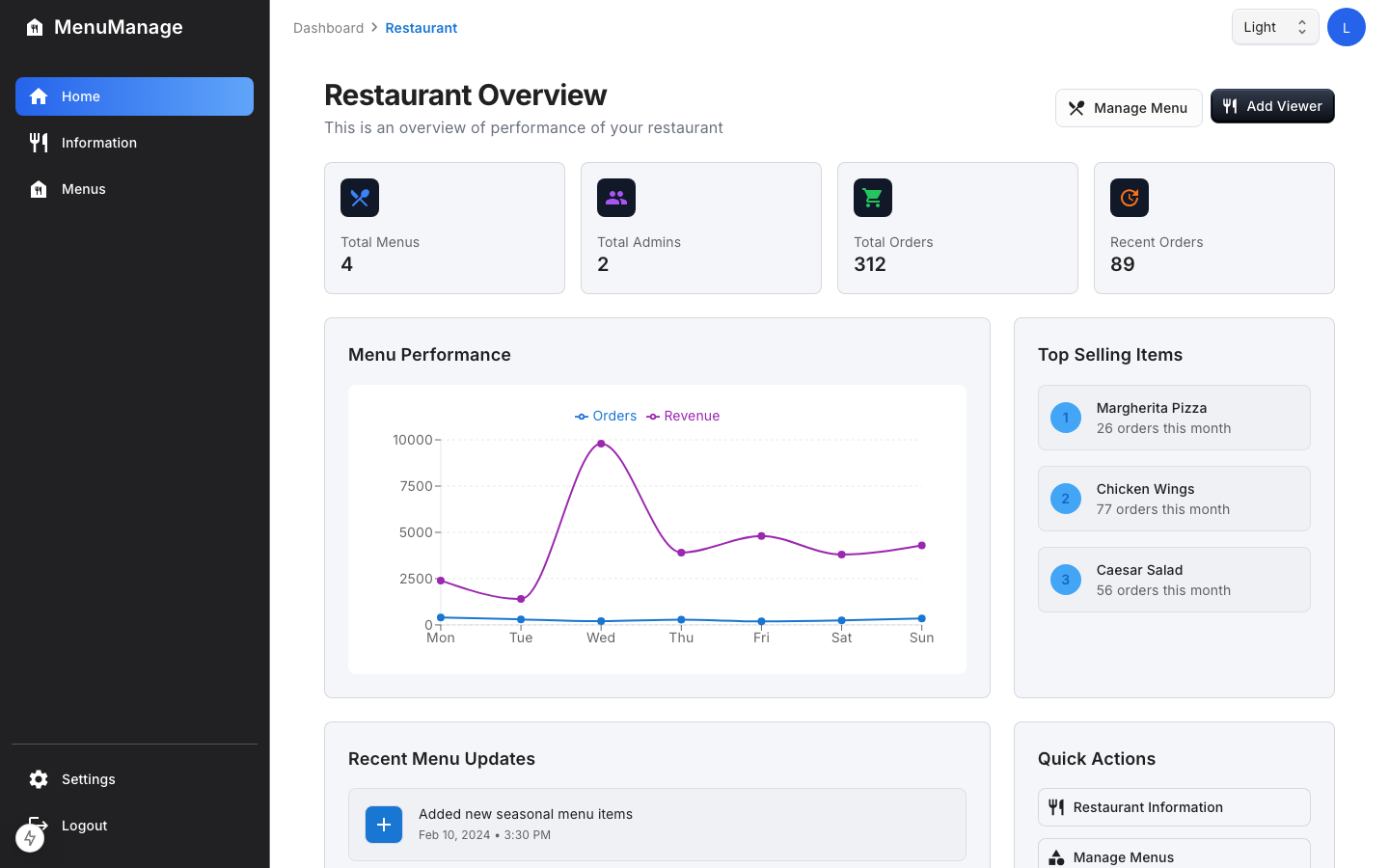
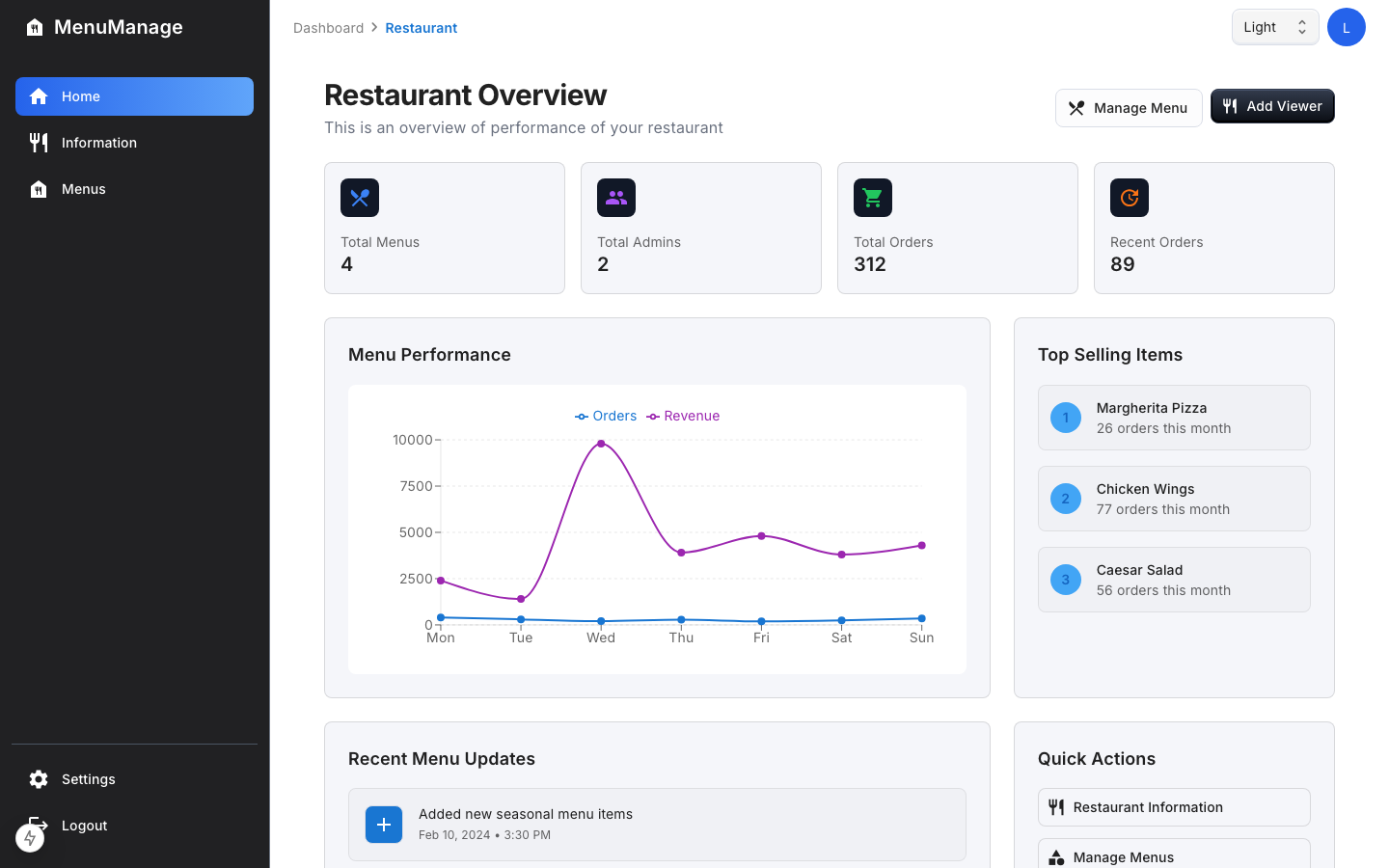
The super-admin surface manages restaurants, brand assets, locations, cuisine details, administrators, menus, and order viewers. Restaurant admins work inside a scoped dashboard to build menus from sections and items with descriptions, pricing, ingredients, allergens, labels, images, availability, and order quantities.
The theme editor controls the public menu experience while keeping a live preview in view. Drag-and-drop organization makes large menus manageable, and version history supports restoring earlier menu states rather than overwriting them permanently.
Published menus are available through public URLs and QR codes. Customers can filter by labels, select table context, add items, and confirm an order; operations users can then monitor and update its status.
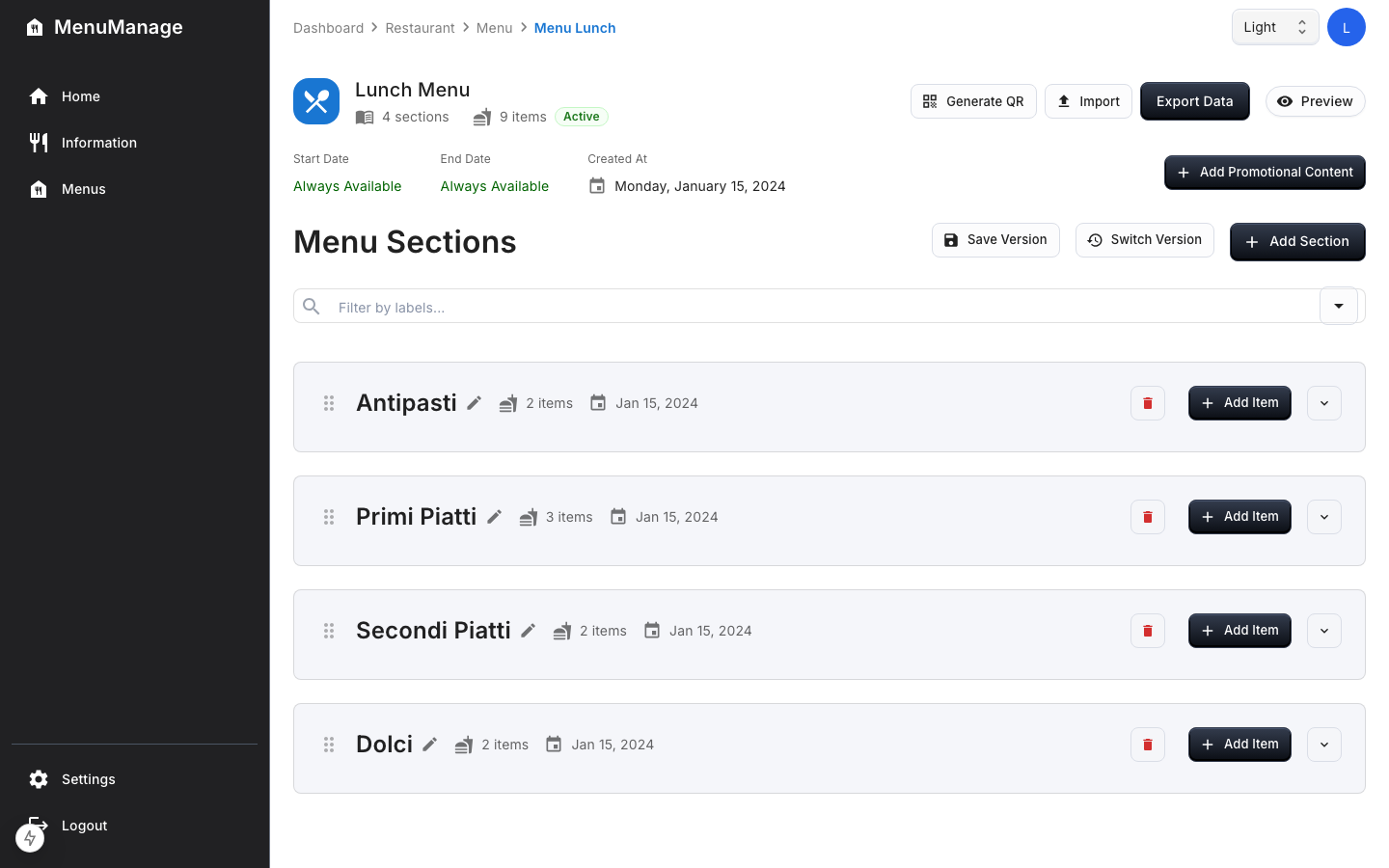
The finished product connects restaurant setup, menu authoring, visual theming, publishing, discovery, customer ordering, and order operations in one application. Import and export support covers PDF, CSV, and JSON, while menu versioning makes changes reversible.
MenuMatch demonstrates the full shape of a hospitality SaaS product: a multi-role admin system, a structured content model, a customer-facing mobile experience, and Firebase-backed authentication, data, and image storage.
A monthly dispatch on design, engineering and the craft of shipping. No fluff. Unsubscribe anytime.